On duty, I carry a department-issued Streamlight. It's fine. It does the job.
But off-duty? Different rules entirely.
When you've seen what can go wrong, you don't cheap out on gear.

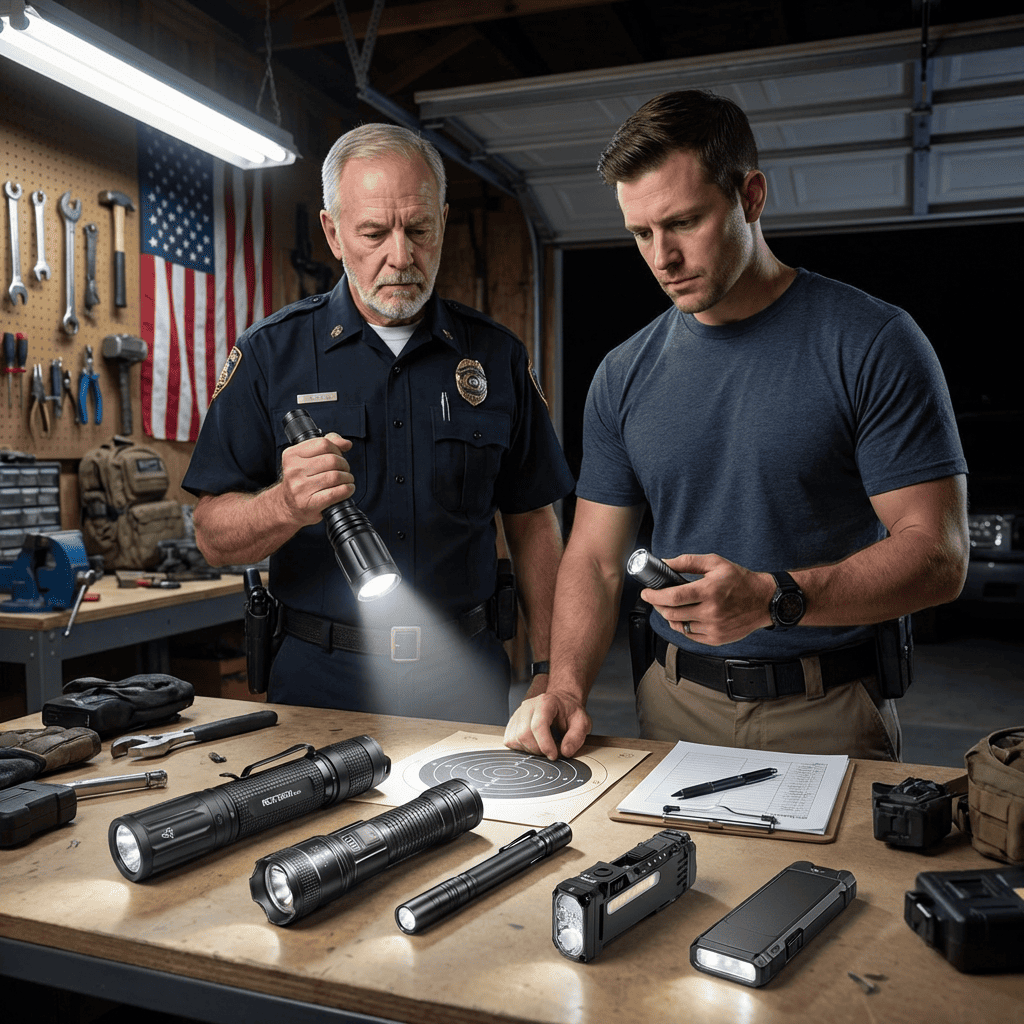
Six months of real-world testing — not Amazon reviews.
On duty, I carry a department-issued Streamlight. It's fine. It does the job.
But off-duty? Different rules entirely.
Most "tactical" flashlights fail at least one of these. The ones on this list pass all five.
After talking to dozens of fellow officers about their off-duty carry, here's what we actually care about:
No cycling through 6 modes to get to high. When I click, I need BRIGHT. Now. A light that makes me work to turn it on is a liability.
1,000+ lumens aimed at someone's eyes at night = 3–5 seconds of disorientation. That's a lifetime to make a decision.
My other hand might be on my family, my phone calling 911, or my firearm. I need to run my light with one hand, every time.
If it's not on me, it's useless. The best flashlight is the one you actually carry — not the one sitting in a drawer.
I'm not treating my gear like museum pieces. It gets dropped, rained on, thrown in bags. It needs to survive real life — not just a product photo shoot.
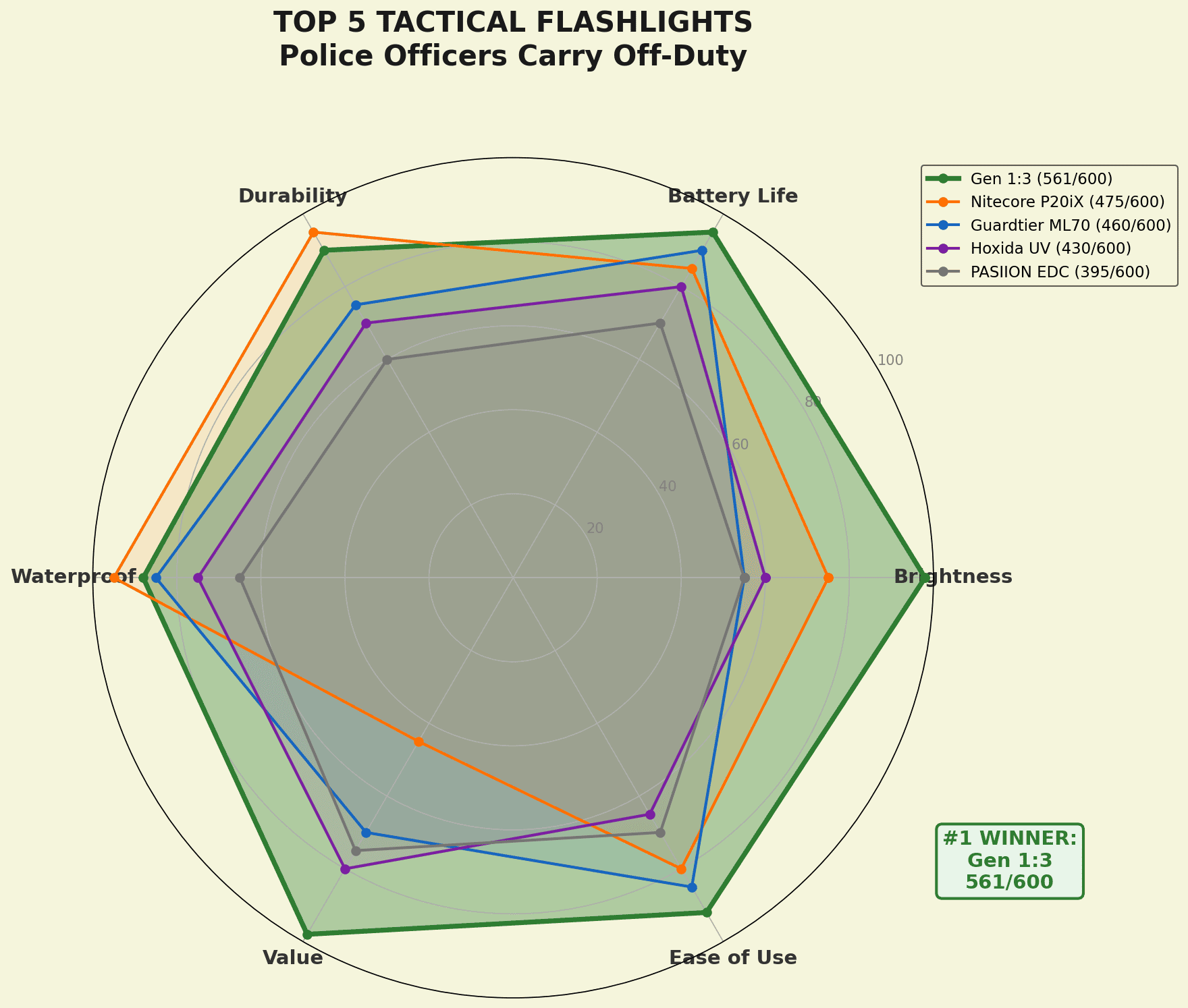
Rated across brightness, battery life, durability, value, and carry comfort
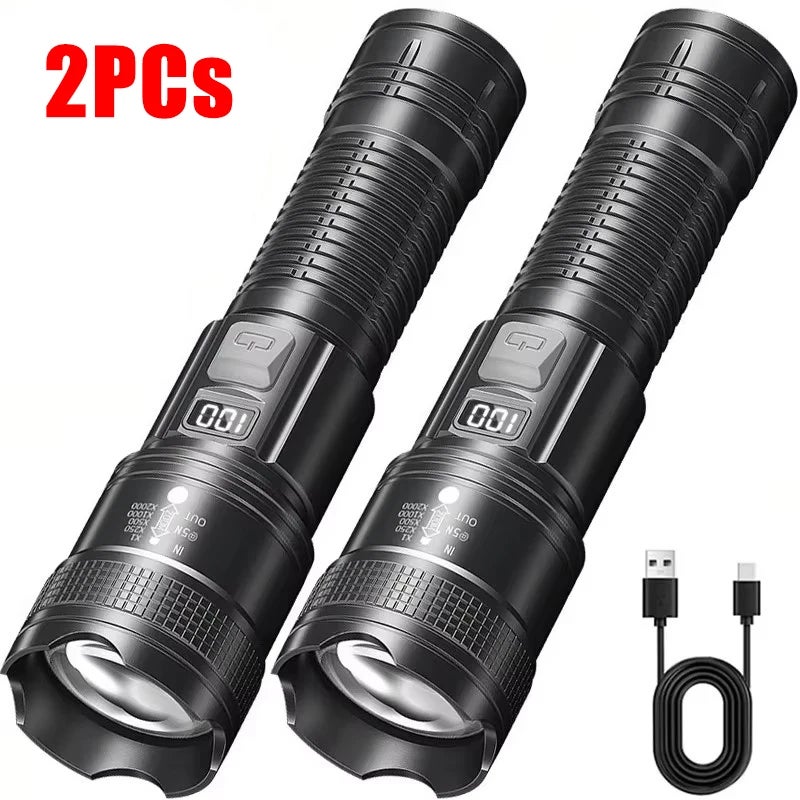
"Let there be light" — and there was. 90,000 lumens of it.
When I first saw "90,000 lumens" I thought it was marketing garbage. Every cheap flashlight on Amazon claims numbers that don't match reality. So I tested it.
First time I clicked it on in my backyard at midnight, my neighbor three houses down came out to ask if everything was okay. That's the kind of brightness that changes situations.


The instant blinding power is real. Point this at someone's face at night and they're not seeing anything for 5+ seconds. In law enforcement terms, that's a lifetime — enough time to assess, move, or act. I ran this through low-light training scenarios with four other officers. Every one of them asked where I got it.
12-hour battery that actually lasts. I charged mine in January. It ran through February without a recharge. When I do charge it, 3-4 hours and it's full. Compared to lights I've had that needed charging every few days — this is a different category.
Built like it's supposed to be dropped. I dropped mine on garage concrete twice during testing. Still perfect. Left it in my truck through a Texas summer — temperatures that would cook most electronics. Still perfect. My partner accidentally kicked his into a training puddle. Fished it out, still working.
5 modes that make sense. High, medium, low, strobe, SOS. No weird 12-click sequences to find the mode you need. No accidentally cycling through disco settings when someone's in your yard at 2 AM. Just what you need, where you expect it.
If you only buy one flashlight from this list, make it this one. Actually, you'll be buying two — because that's how they sell it. And that's part of why it wins. The brightness is real, the battery is real, the durability is real, and the value is unmatched by anything else we tested.
Best For: Anyone who takes their family's safety seriously and wants a light they can actually rely on.
120-Day Money Back Guarantee · Ships Fast · Secure Checkout
High demand — 2-packs keep selling out. Don't wait.
→ CLAIM 65% OFF TODAY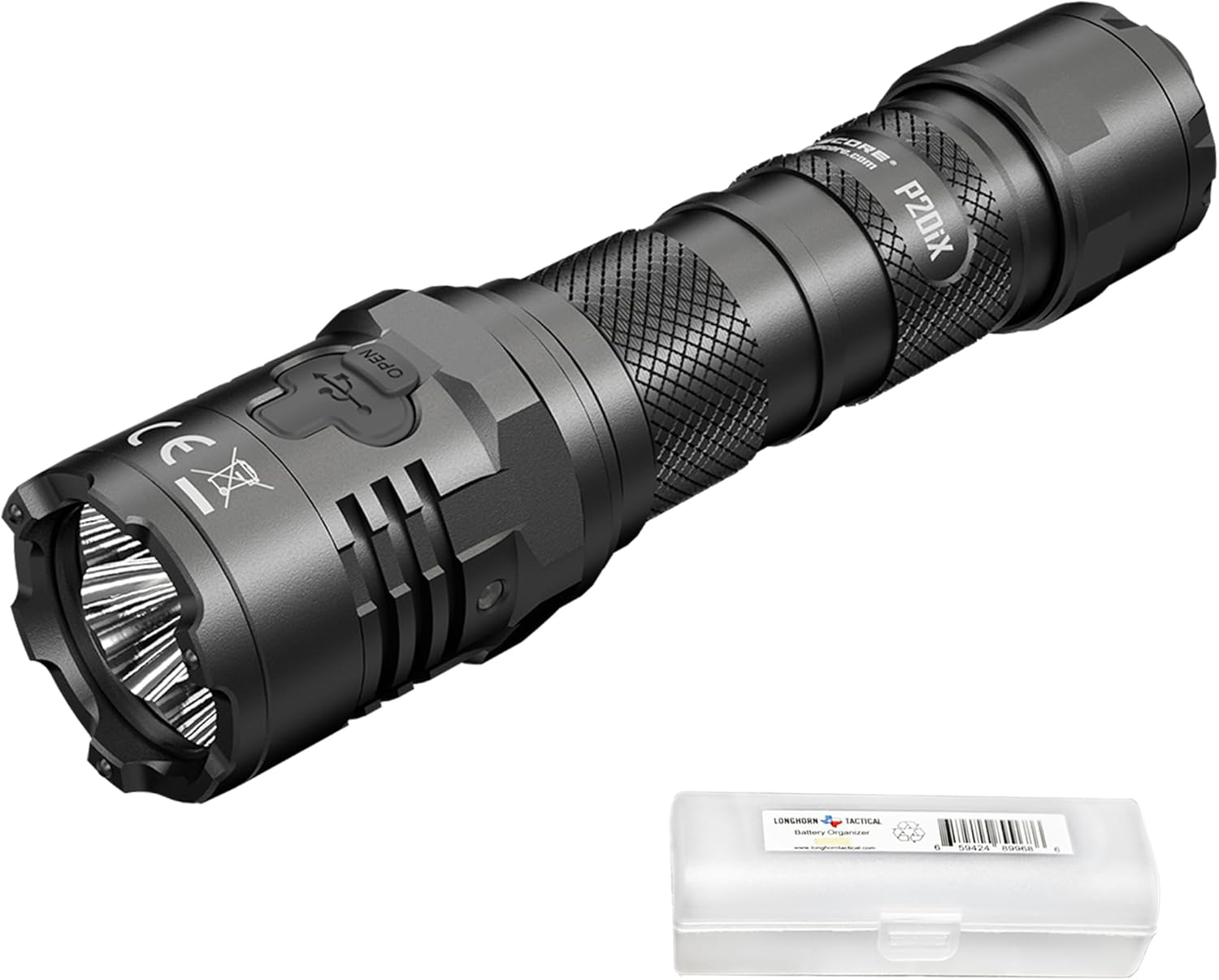
Nitecore is the name serious flashlight people know. The P20iX is their flagship tactical offering — built like a cylinder of solid steel, IP68 rated, MOLLE-compatible holster included. One military reviewer called it better than government-issued gear. That's high praise.
Here's my problem with it: the math doesn't work. For the price of ONE Nitecore, I can buy THREE Gen 1:3 two-packs. That's six flashlights — one for every car, every nightstand, and a few to give away. The Gen 1:3 also delivers 90,000 lumens versus 4,000. The Nitecore is a better-looking product. It is not a better value.
The turbo mode heat issue is real. After 30 seconds on max brightness, it starts to run hot. That's a design compromise — physics of pushing 4,000 lumens through a compact body. Fine for trained users who understand the limitation. Not ideal for a family member grabbing it in an emergency.
Excellent build quality. Respected brand. Poor value compared to the Gen 1:3. If brand name matters more than lumen count and cost, this is your light.
Best For: Enthusiasts who want the Nitecore name and don't mind paying premium for it.
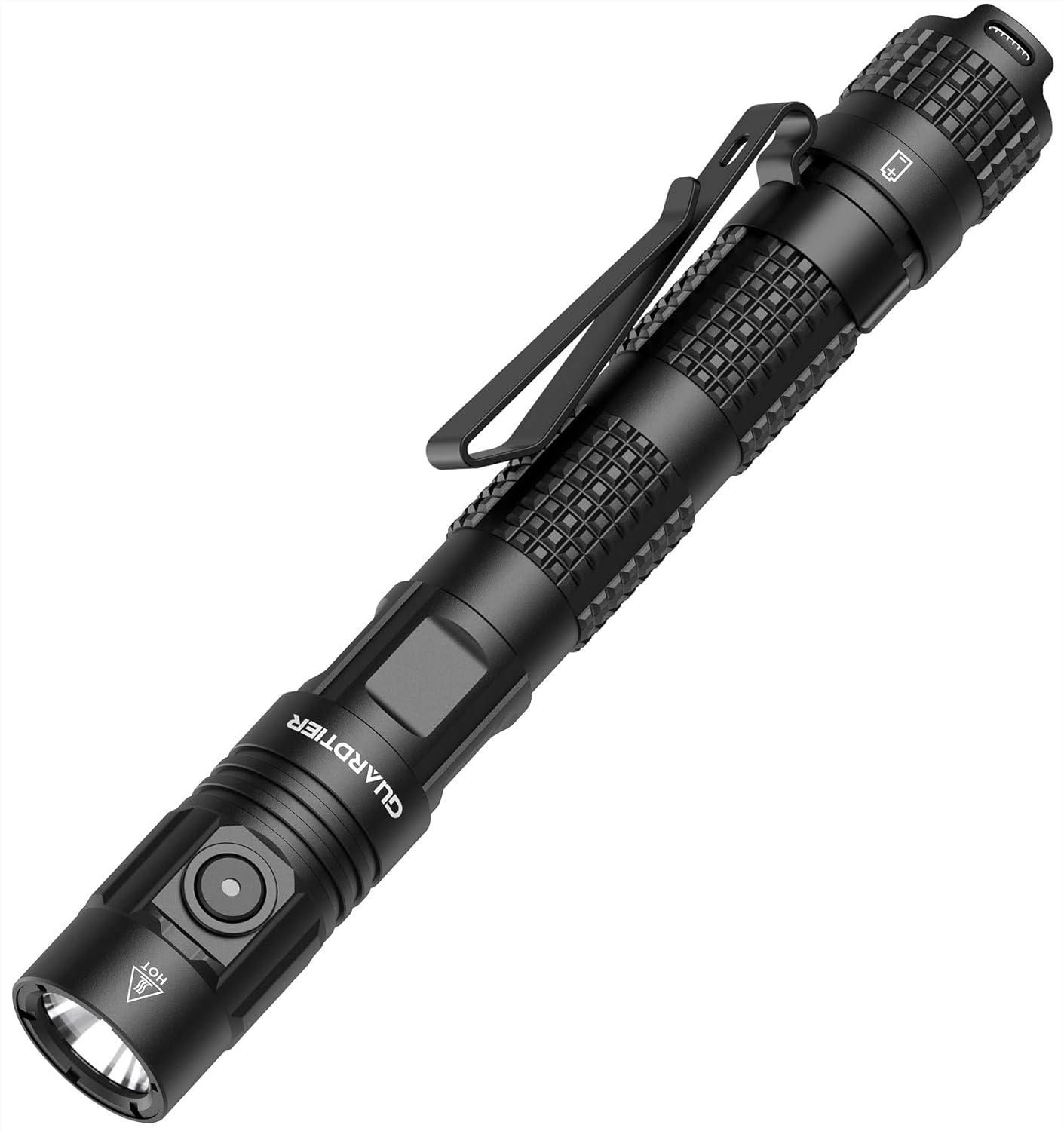
The Guardtier ML70 is built for everyday carry, not tactical situations. The pen-style design clips cleanly into a shirt or pants pocket. The AA backup option is genuinely smart — if the rechargeable battery dies, you're not helpless, you just find two AAs.
But 1,500 lumens is not enough for what most people buying a tactical flashlight actually need. At 1,500 lumens, you're illuminating — not disorienting. The whole point of a tactical light is the ability to temporarily blind a threat. This doesn't do that. It's a very good everyday carry pocket light that's been marketed as something it isn't.
The reliability reports concern me more. Multiple reviewers noted it stopped functioning after a month of daily carry. For a flashlight you're depending on in an emergency, that's not acceptable.
Good daily carry light for non-tactical use. Not what you want when your family's safety is on the line.
Best For: Everyday pocket carry, non-emergency use. Not for law enforcement or home defense.
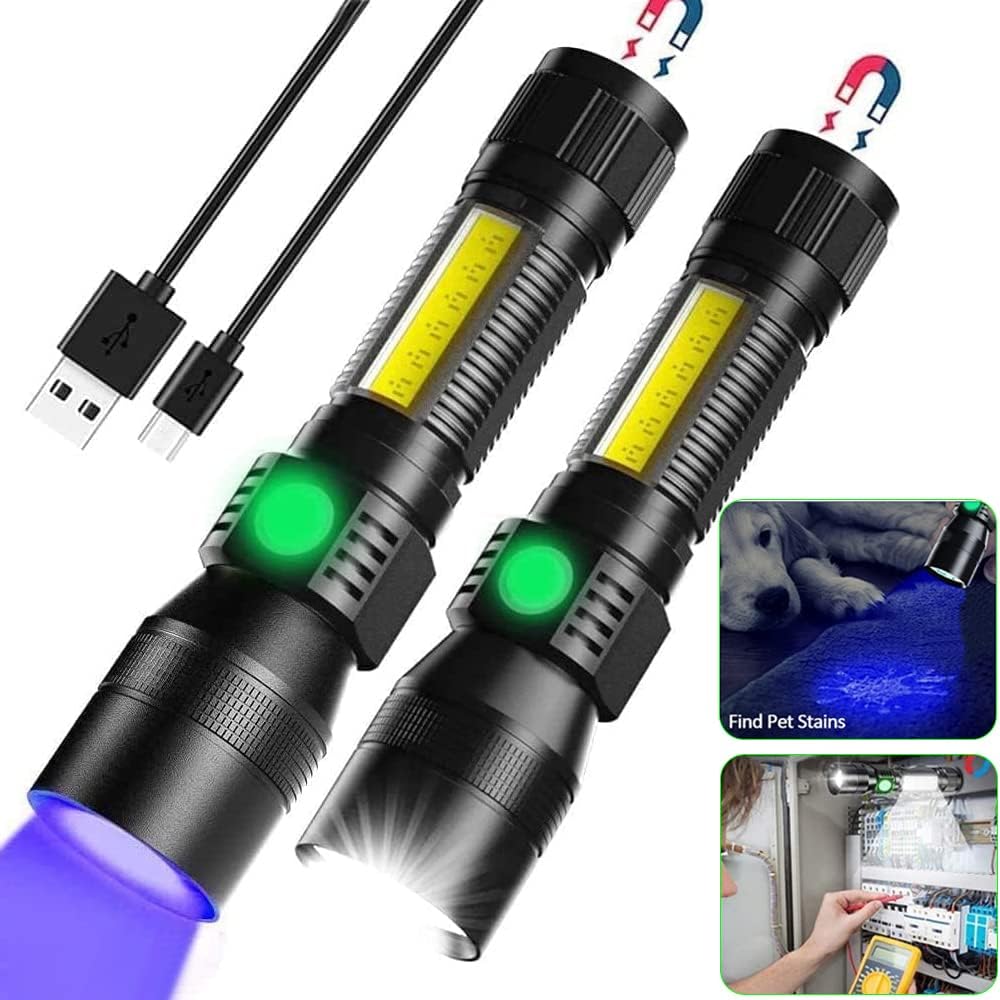
The Hoxida is the Swiss Army knife of flashlights — white light, UV, red light, COB work light, magnetic base. It does a lot of things. HVAC technicians love it. Pet owners love the UV for finding stains. It has a genuine use case.
That use case is not protecting your family at 2 AM. When you need to temporarily blind a threat, 2,000 lumens at close range isn't what you want. You want 90,000. The Hoxida is a work tool that's been placed in a tactical category.
The complexity also creates reliability issues. More features means more things that can fail. Multiple reviewers reported the charging function failed after a few months of daily use. For a work light used occasionally, that's annoying. For a light you're depending on in an emergency, that's a problem.
Excellent work light for mechanics and tradespeople. Wrong tool for home defense or off-duty carry.
Best For: HVAC, mechanics, pet owners, inspections. Not tactical use.
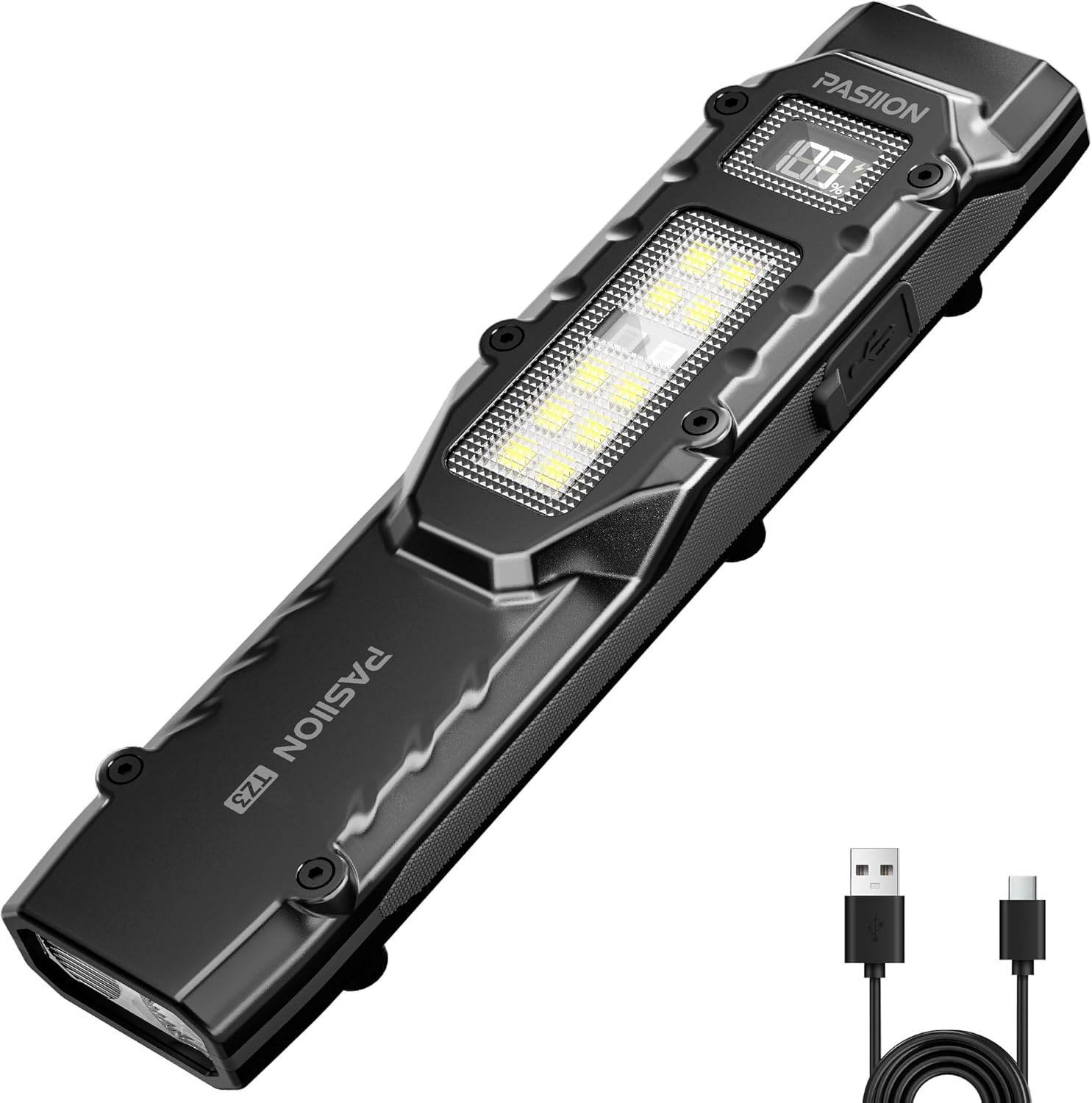
For $16, the PASIION looks impressive on paper. Flat EDC design, digital battery display, dual switches, lockout mode. It's packed with features for a budget light.
Here's the reality: cheap flashlights have cheap problems. The button design causes accidental activation in your pocket — which means it's running hot against your leg without you knowing. One reviewer noted it broke within a week of purchase. Another reported overheating as a consistent issue.
The price comparison also doesn't work in its favor. At $16 for one light with 1,500 lumens, you're paying almost the same per-unit as the Gen 1:3 — which gives you 90,000 lumens and a second light for your truck.
You don't cheap out on the gear your family depends on. Every cop knows this. Buy right once.
Budget light with budget reliability. Fine if you need a throwaway backup. Not acceptable as your primary off-duty light.
Best For: Non-critical backup use only. Do not rely on this.
| Feature | #1 Gen 1:3 ⭐ | #2 Nitecore | #3 Guardtier | #4 Hoxida | #5 PASIION |
|---|---|---|---|---|---|
| Overall Score | 9.7 / A+ | 7.5 / B+ | 7.0 / B− | 6.3 / C+ | 5.5 / D+ |
| Lumens | 90,000 | 4,000 | 1,500 | 2,000 | 1,500 |
| Blinding Capability | ✅ Yes | ✅ Partial | ❌ No | ❌ No | ❌ No |
| Waterproof Rating | IPX7 | IP68 | IPX7 | IPX6 | IPX5 |
| 2-Pack Included | ✅ | ❌ | ❌ | ✅ | ❌ |
| Battery Life | 12 Hours | ~4 Hours | 37 Hours eco | ~6 Hours | ~4 Hours |
| Drop Tested | ✅ | ✅ | ❌ | ❌ | ❌ |
| Reliability Reports | ✅ Solid | ✅ Solid | ❌ Issues | ❌ Issues | ❌ Failures |
| Guarantee | 120 Days | 30 Days | 30 Days | 30 Days | 30 Days |
The only flashlight on this list that delivers real blinding power, real battery life, and real value. Try it risk-free for 120 days.
→ Get 65% Off Today